




An article for La Motte by Clifford Roberts
Bread has become so commonplace to the point of virtual invisibility. A handful of initiatives at La Motte in Franschhoek, however, harness the farm’s history and partnerships to put the benefits of artisan bread back in the spotlight.
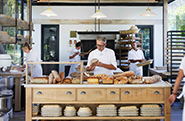
Mornings are always busy for Ricardo Slawers, and as usual, he’s been at it since before dawn. He whips around the bakery for a last-minute check before stepping out to meet his guests because this morning, things will get busier than normal.
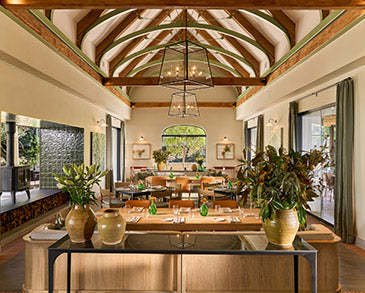
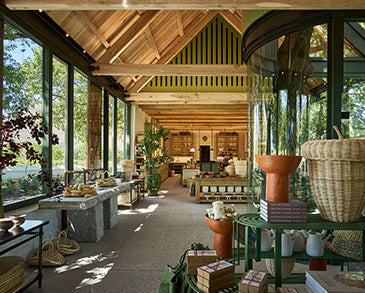
In 2023, La Motte opened its Artisanal Bakery & Garden Café - famously curated from the start by Markus Färbinger, arguably the father of South Africa’s contemporary movement for artisanal bread.
Fast forward three years later, and the celebrated Franschhoek estate took a significant new step with this enterprise. Launching a flour milling and bread-baking visitor experience, it also unveiled Africa’s first certified “bread sommelier”.
The qualification, achieved by Ricardo, La Motte’s head baker, was conceived in 2015 by Academy of German Baking Craft. “[The Academy] is like the last fortress for knights of a thousand-year-old European tradition of trade guilds,” explained Markus.
When he first heard about the qualification, he admits to thinking they were joking. “Then I saw the course material and knew this isn’t for the faint-hearted.”
The guild needed a way to re-invent itself in a changing world and this was its answer: to reclaim the social and cultural connection of one of the oldest foods from commodification.
The course length is just shy of 12 months and combines online and in-person attendance at the Academy in Weinheim, about one hours’ drive south of Frankfurt. Since launching, just over 320 bread sommeliers – a “global elite” in the words of the Academy - have successfully completed the programme.
The bigger picture
Returning to La Motte, the story came together in late October at a small media event held at the farm and hosted by La Motte owner Hanneli Rupert, who ultimately made Ricardo’s new role possible. It was a confluence of the farm’s own history and perspectives on artisanal bread.
The Milling & Baking Experience begins with coffee and croissants, followed by a visit to the farm’s historic water mill, and then a short workshop in the bakery on fermentation, the sourdough method and working with dough. It includes sampling small bites of different breads. Lunch is then served and guests are sent on their way with a fresh-baked loaf, a baking recipe book and a bottle of wine.
A cornerstone to the experience is however, to provide better understanding of the health benefits that come from bread with ingredients farmed and milled in specific way and made using longer fermentation.
It begins with the wheat
Franschhoek’s farmlands are primarily known for the vineyards and fruit trees, and for a field of lavender encountered alongside the main road as you approach town. Just beyond that field, however, is La Motte’s 12ha patch of organically-farmed wheat.
Farming it is a challenge, admits senior farm manager Jaco Visser, whose focus is La Motte’s extensive vineyards that produce its award-winning wines. The region’s climate isn’t ideal for grain, which means that harvests are relatively small compared to the large-scale farming of areas like the Overberg where he’s from. Plus, the pesticide-free farming style they adopt for the wheat means he must rely on an environment-first reliance on natural predators, ground covers, organic compost and similar strategies.
Nonetheless, sufficient tonnage is provided to supplement the bakery’s requirements while also, possibly soon, being available for sale.
This is La Motte’s third harvest, but its organic pedigree didn’t begin at the farm. The first seeds were originally supplied by Prieska farmer Bertie Coetzee of Lowerland, a champion of regenerative farming and South Africa’s only current producer of organically certified wheat. Now, a La Motte blend has emerged, which the farm in turn supplies to Lowerland.
Milling matters
The next important part of the tale relates to the conversion of that grain to flour, in a building the size of an average modern bedroom. No past records report the milling of flour at La Motte since the land was granted to a German immigrant in 1695, but when Dr Anton Rupert acquired the property in 1970, he found the remains of a water-powered mill. This he set about renovating.
Some 15 years ago, renovation was required anew – this time undertaken with the help of one of Cape Town’s foremost molinologists, Andy Selfe. Andy, whose says his knack with tractor motors led him into world of the millwright, was among the guests attending the function at the bakery in honour of Ricardo’s achievement.
One of his own achievements were celebrated a while back, when he received the Mayor’s Medal for his part in the restoration of Cape Town’s historic Mostert’s Mill, which in 2021 had been badly damaged in a veldfire.
Importantly for the mill at La Motte, Andy explained that traditional milling employs wind or water to turn two disc-shaped stones that grind wheat to flour. The process retains bran and other parts of the wheat that are generally considered good for digestion. When contemporary methods were found for mass production post WW2, bread could be processed cheaply, at higher volumes and with finer grades of flour. The health value has however, always been contentious.
But even at La Motte, speed of production to supply the bakery was a challenge, so a second mill was installed. This electric version, the size of a single bed perhaps, was made by Austrian firm Osttiroler, and also works with millstones.
Andy points out that compared to the modern farming, milling and baking, the La Motte bakery can be proud that its bread essentially uses zero food miles.
Forged by fire
Stepping behind the counter of the Artisanal Bakery & Café feels like going behind the magician’s curtain. Out of sight and with a fair share of mystery, marvellous things are conjured up for an audience that - in the case of La Motte - is literally hungry for the show to begin.
This is what guests get on the Milling & Baking Experience.
A broad, waist-high table and the iron door to the oven is partially hidden from view by a display of crusty breads of varying shapes and sizes. Beauty is a measure often applied to the way their crusts are tanned, cracked and full.
Participants may number no more than six, a comfortable size as we gather to receive instruction from Ricardo. Having shown us the mill, he now talks about the lively starter and life-giving properties it passes on to the flour. Dough is provided and we each gingerly fondle the softness, like first-time parents afraid of hurting their newborn.
Behind him looms the oven, a large, wood-fired cavity sealed by a small metal door. It reminds me of a steam engine’s cab, though the design, by Four Grand-Mère in France, seems to serve twin masters of baking and aesthetics. A marvel of engineering, it incorporates water inlets for manual steam control, and an internal heat distribution system feeding head from an adjoining hearth and a design for optimised energy efficiency.
Sharing the story of bread
During the bakery session, Ricardo runs his fingers over every loaf he presents, gently pressing down and listening. Once cut, he puts it to his nose and draws a deep breath. He talks about the aroma, the feel and temperature of the crumb. He cuts off some samples and we taste them, awkwardly ruminating in the silence.
He says learning to be a bread sommelier was “all about the language of bread – taste, smell, sound. All of that.
“I learned a lot,” he adds.
Why do we need a bread sommelier? I ask.
“There’s have a lot of negativity around bread. A bread sommelier is there to explain the benefits of well-made bread.”
It’s all a far cry from his youth. He was born in Riversdale and after school started training as a carpenter, “but it didn’t work out”. He moved to Franschhoek and worked in a restaurant before training as a chocolatier, which introduced him to baking. He joined La Motte when an opening arose in the bakery.
It was his dedication that Markus first noticed. “He’s like an athlete, working hard physically but also in the way he thinks,” he says.
“For 10 years he worked as a dedicated baker and has led an ever-increasing team. To succeed at the first attempt [at the bread sommelier programme] is a massive thing. He had to write a 60-page dissertation, which is easy for an academic, but for an artisan craftsman, it’s another dimension.”
Ricardo’s chosen topic for his dissertation was the mosbolletjie. It also required making the bun and because the course happened after harvest, he had to add a step before baking and make his own grape must.
Markus says the future of good bread relies on learning. “We need to learn the applied science of breadmaking and have this skill to pass on and learn how to show up in this world. Ricardo certainly did.
“The commitment is not just for La Motte,” he adds. “But beyond, in other communities such as that of carpenters and millers.
“I love the trinity of what is happening here – we are farming our own wheat, milling at an ancient mill and baking wholesome bread. Bread is not a staple – something that is sustaining, not cheap. It is meaningful and valuable.”
The road to sharing this story at a deeper level has just begun for Ricardo. As the breakfast crowd is replaced by lunch service, he disappears behind the counter again. As Africa’s new bread sommelier, he knows more than most that the life of bread offers little respite, even to the most elite guardians of the craft.
Details about the Milling & Baking Experience
Time: 09:00 – 13:30
Limited: Only 6 guests per experience.
Cost: R1350pp.
Bookings: la-motte.com or send email to bakery@la-motte.co.za or 021 876 8825.